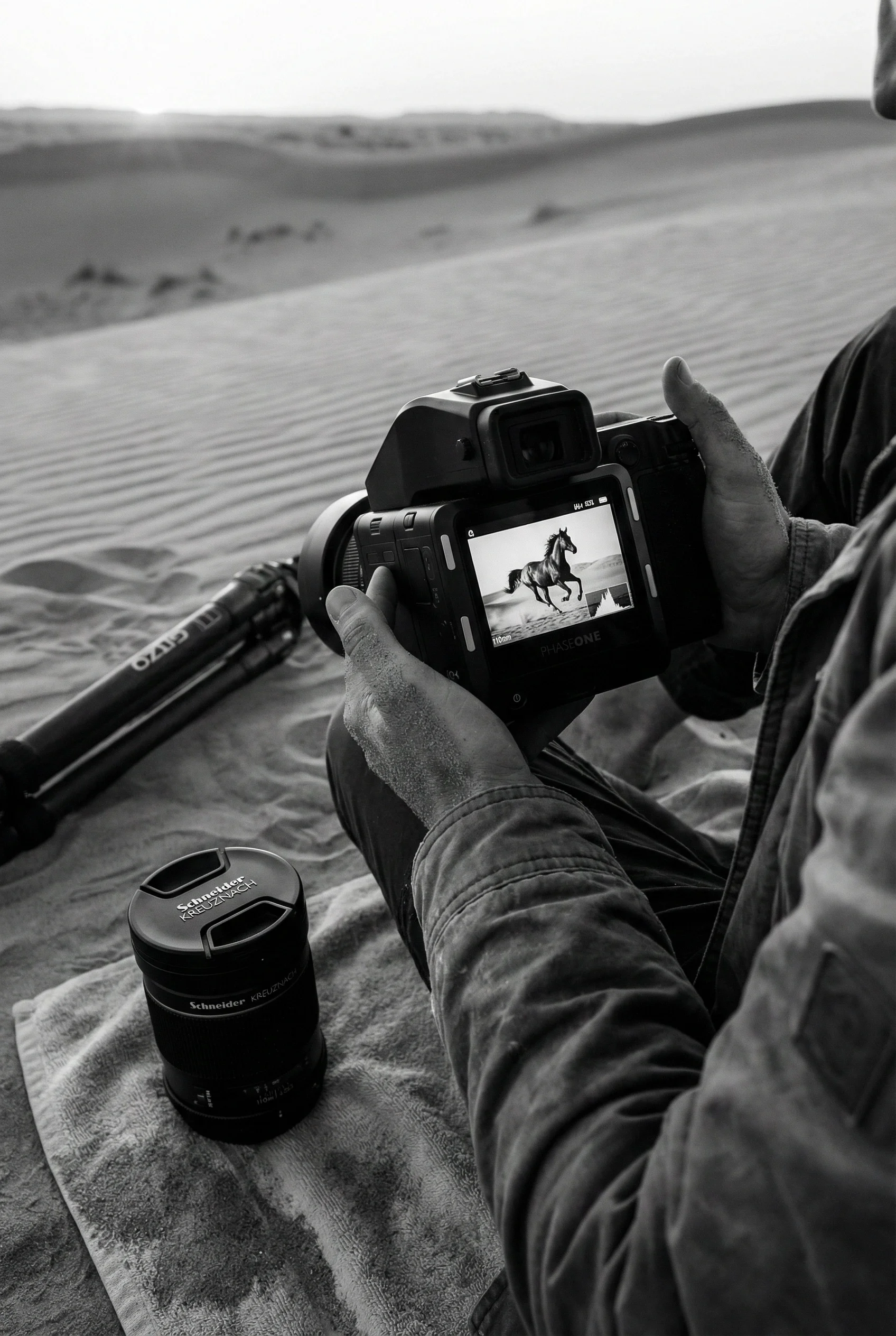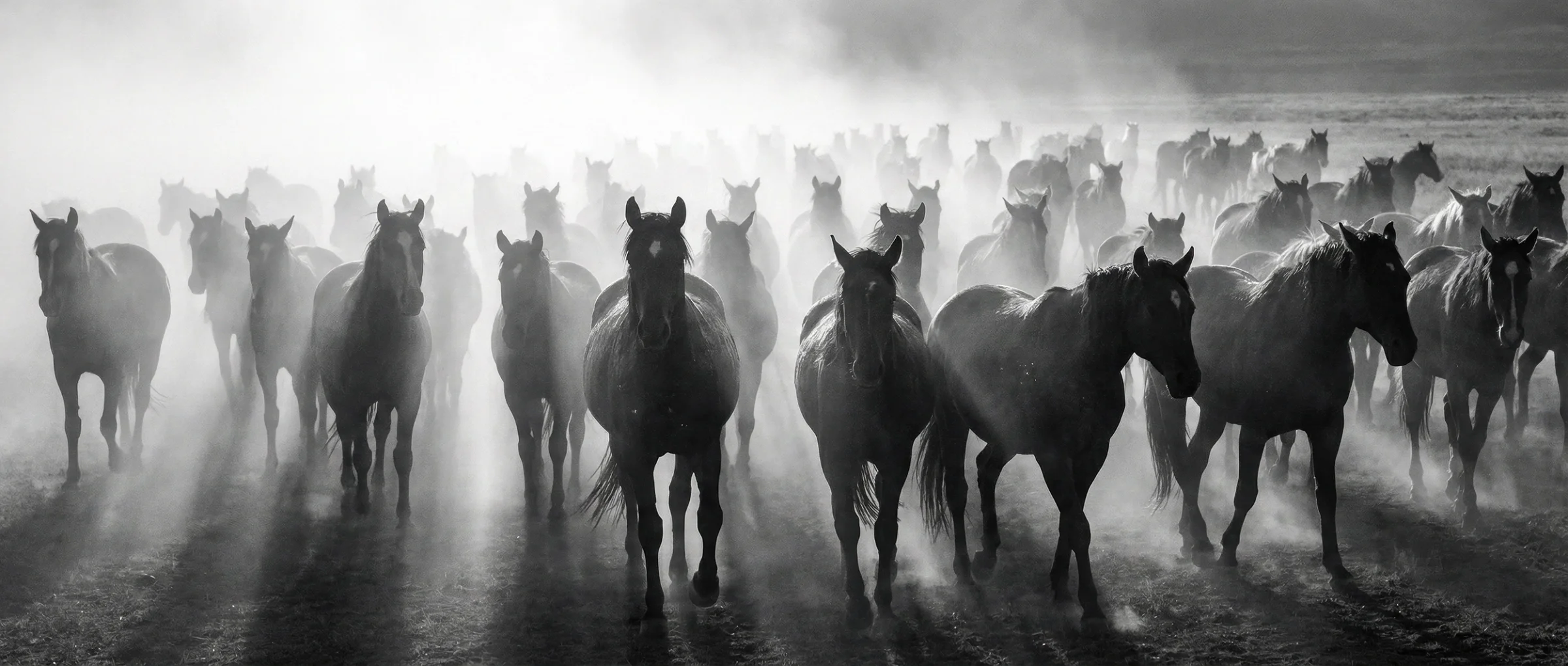
When a collector acquires one of my photographs — printed at 150-megapixel resolution on museum-grade Hahnemühle substrates using archival pigment inks — they are receiving an object engineered to endure for over two centuries. The materials are extraordinary. The craftsmanship is meticulous. But the longevity of any fine art print ultimately depends on what happens after it leaves my studio. How it is displayed, lit, framed, and cared for will determine whether it looks as luminous in fifty years as it does the day it arrives.
This is not an area where guesswork serves you well. I have seen museum-quality prints compromised by well-intentioned but misinformed handling — hung opposite uncovered windows, framed with acidic materials, cleaned with household products. These are mistakes that accumulate invisibly until, one day, the damage becomes apparent and irreversible.
What follows is the same guidance I provide to every collector who acquires my work. It draws on two decades of experience in fine art production, the conservation standards of institutions like the Metropolitan Museum of Art and the Tate, and the technical specifications of the materials I use at my InnFRAME printing studio. Whether you own one print or fifty, this guide will help you protect both the beauty and the value of your investment.
The First 48 Hours: Receiving Your Print
The moment your artwork arrives is, paradoxically, one of the moments it is most vulnerable. Every print I ship is professionally packaged — acid-free tissue, rigid protective boards, double-walled crating for larger works — but the transition from package to wall requires care.
Allow the work to acclimatise. If the print has been shipped internationally or across climate zones, give it at least 24 hours in its packaging within your home before unwrapping. Sudden temperature and humidity changes can cause paper substrates to expand or contract unevenly, potentially introducing subtle warping that would not occur if the transition were gradual.
Handle with clean, dry hands — or better, cotton gloves. The natural oils in human skin are mildly acidic and will, over time, leave marks on unprotected paper surfaces. Hold prints by their edges only, never touching the image area. For larger works, two people should handle the piece, supporting it from below and behind.
Inspect carefully in good light. Before framing, examine the print under even, diffused lighting. Note the paper texture, the tonal range, the way ink sits on the substrate. This is your baseline — the standard against which you will measure the print's condition for years to come. If anything appears irregular, photograph it and contact the gallery immediately.
Choosing the Right Environment
A fine art print is an organic object. The paper substrate breathes. The ink surface responds to its surroundings. The environment in which you display your work is the single most important factor in its long-term preservation — more important than the frame, the glass, or any other protective measure. Get the environment right, and the print will outlast you.
Light is the most insidious threat to any work on paper. Ultraviolet radiation breaks down pigment molecules at a cellular level — a process that is cumulative, invisible in its early stages, and entirely irreversible. Direct sunlight is the obvious enemy, but indirect daylight and even fluorescent lighting carry significant UV content. The conservation standard for works on paper, as established by the International Council of Museums, is a maximum of 50 lux — roughly the soft ambient light of a well-appointed living room in the evening. This does not mean your print must live in a cave. It means you should avoid hanging it on a wall that receives direct sunlight at any point during the day, and you should never position it opposite an uncovered window.
Humidity is the silent variable that most collectors underestimate. Paper is hygroscopic — it absorbs and releases moisture from its environment continuously. At relative humidity above 60%, the risk of foxing (those distinctive brown spots that plague old documents), mould growth, and substrate warping increases dramatically. Below 30%, the paper becomes brittle and prone to cracking. The ideal range is 40–55% relative humidity, maintained as consistently as possible. A quality hygrometer, placed near your collection, costs less than a dinner out and pays for itself a thousand times over.
Temperature affects preservation primarily through its relationship with humidity — warmer air holds more moisture, which means temperature fluctuations create humidity fluctuations. The ideal is a stable 18–22°C (64–72°F). Avoid placing prints near radiators, fireplaces, air conditioning vents, or exterior walls that experience significant thermal variation.
The materials I use are rated for over 200 years of permanence. Your environment determines whether they achieve that potential.
Display and Hanging
Where and how you hang your print affects both its visual impact and its preservation. These considerations often align — a well-chosen position tends to be both visually powerful and environmentally sound.
Wall selection should prioritise interior walls over exterior walls, which are more prone to temperature variation and, in older buildings, moisture migration. North-facing walls in the Northern Hemisphere (south-facing in the Southern Hemisphere) receive the least direct sunlight and are generally the safest choice for permanent display. If your preferred wall does receive some daylight, UV-filtering glazing becomes essential — more on that shortly.
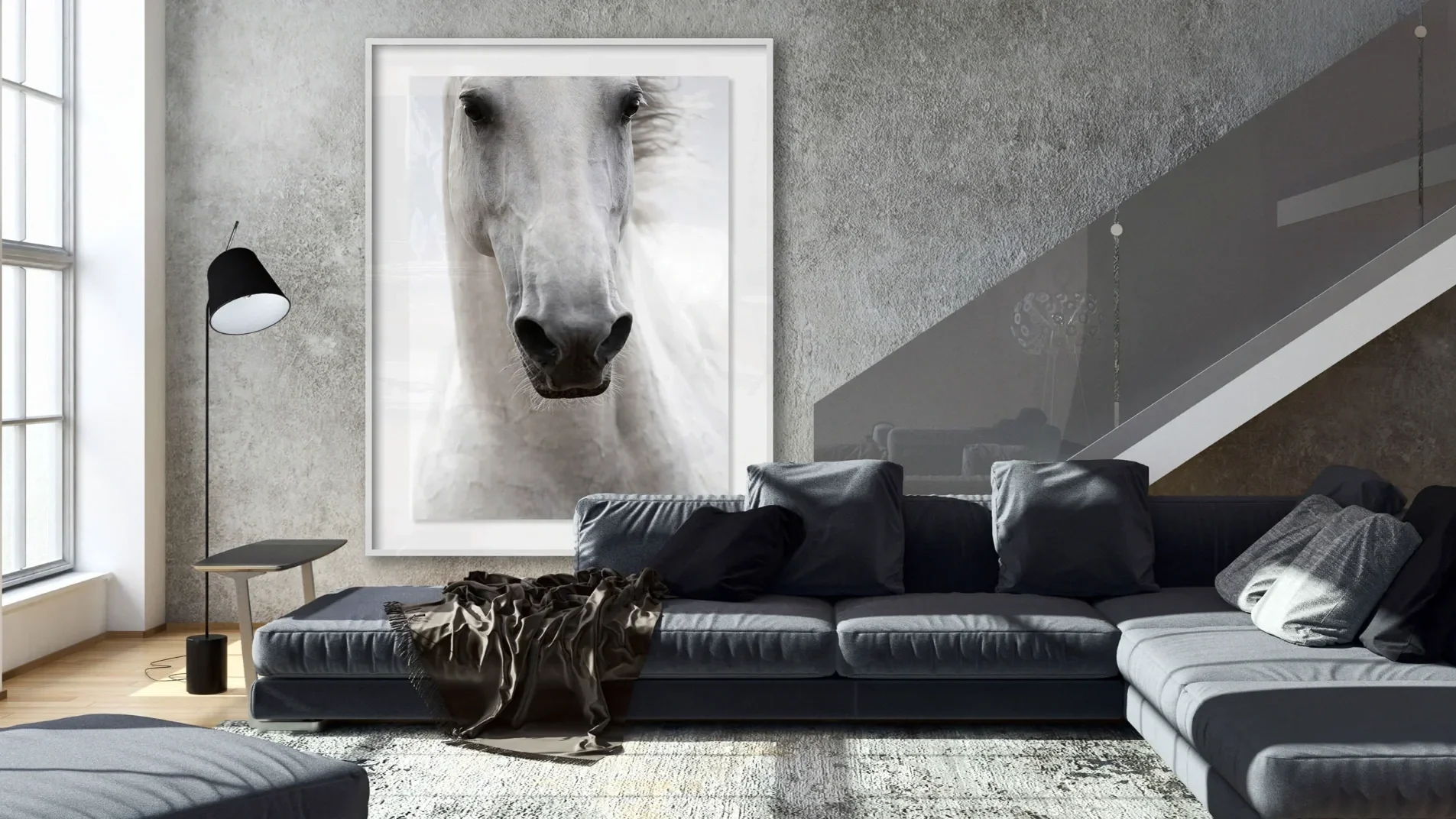
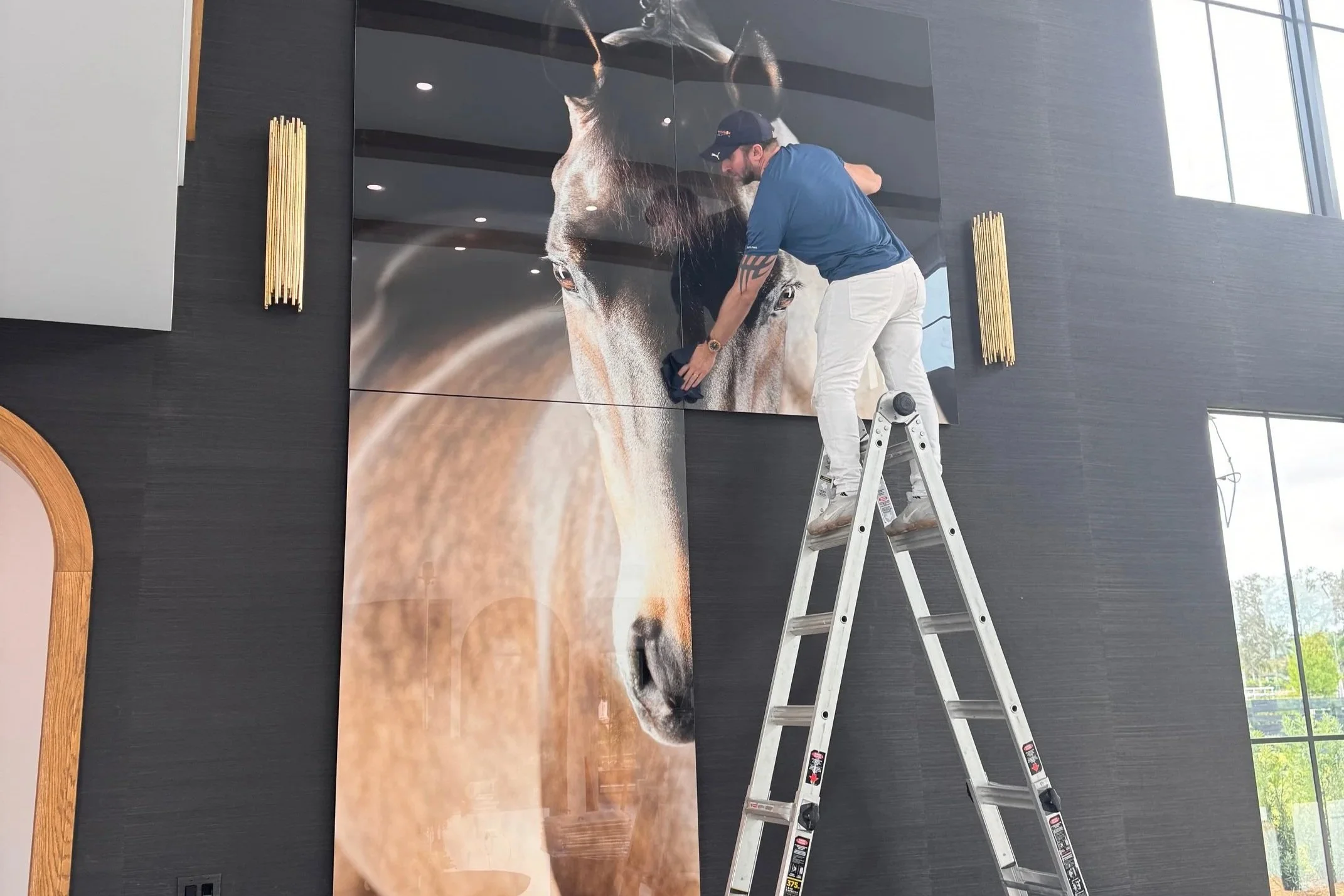
Hanging height is both an aesthetic and practical matter. The standard museum convention is to position the centre of the work at 57 inches (145 cm) from the floor — roughly average eye level. For larger works, particularly those in the 60×80-inch or 71×92-inch formats I offer, the lower edge should sit no less than 24 inches from the floor to prevent accidental contact and to allow the viewer sufficient distance to take in the full composition.
Hardware should be chosen for the weight of the framed piece, not the unframed print. A large-format photograph in a museum-quality frame with glazing can weigh 15–30 kilograms. Use appropriate wall anchors rated for at least twice the weight of the piece. Two-point hanging systems distribute weight more evenly and keep the frame level. If you are uncertain, a professional art installer is a worthwhile investment — most galleries can recommend one.
Framing and Glazing: The Critical Shield
A frame is not merely decorative. For a fine art print, the frame and its glazing constitute the primary physical barrier between the artwork and every environmental threat it will face for decades. The decisions you make here will have more practical impact on the print's longevity than almost any other choice.
Museum-grade glazing is non-negotiable. Standard picture glass blocks virtually no UV radiation. Museum glass — specifically, I recommend Tru Vue Museum Glass or equivalent — blocks 99% of UV light while providing extraordinary optical clarity with less than 1% reflectance. The cost premium over standard glass is significant, but for a work valued at thousands or tens of thousands of dollars, it is not an area for economising. If UV-filtering glazing had existed when the great watercolorists of the 18th century were at work, we would not have lost so many of their pieces to fading.
Acid-free materials throughout. Every component that touches or surrounds your print must be acid-free and lignin-free. This includes the mat board, the backing board, the mounting corners or hinges, and any tape used in the process. Standard cardboard, commercial tapes, and conventional mounting materials contain acids that will migrate into the paper substrate over years, causing yellowing, embrittlement, and irreversible staining known as "mat burn." Specify conservation-grade materials to your framer — and if they are unfamiliar with the term, find a different framer.
Never permanently adhere a fine art print. Dry mounting, spray adhesive, and permanent tapes are categorically unacceptable for valuable works on paper. These methods are irreversible and will destroy both the print's condition and its resale value. The correct approach is to secure the print using archival mounting corners (Mylar or acid-free linen) or Japanese paper hinges with wheat starch paste. These methods hold the print securely while remaining fully reversible — a conservator could remove and remount the work decades later with no damage to the original.
Maintain an air gap. The print surface should never make direct contact with the glazing. In humid conditions, moisture can condense on the inner surface of glass and transfer directly to the print, causing adhesion, cockling, or mould. A properly cut mat provides the necessary separation. For float-mounted works (displayed without a visible mat), spacer strips between the glazing and the print serve the same function.
Lighting Your Print
Proper lighting transforms a fine art photograph from something you see on the wall to something you experience. The interplay of light on a museum-grade substrate — the way a Hahnemühle surface catches and holds illumination, the depth that emerges in shadow areas — is part of what separates a fine art print from a commercial reproduction. But the light that reveals beauty can also destroy it. The objective is to find the balance.
LED picture lights represent the current best practice for illuminating fine art. Modern LED sources produce virtually zero UV radiation and negligible infrared heat — the two wavelengths most harmful to works on paper. Choose fixtures with a colour temperature of 2700K–3000K (warm white) and a CRI (colour rendering index) of 90 or above. This ensures that the tonal range of the print is rendered faithfully, with the warmth and depth the artist intended.
Position lighting at a 30-degree angle from the wall to minimise glare on glazed works. For large-format prints, a pair of fixtures positioned symmetrically will provide more even illumination than a single source. Dimmable fixtures allow you to adjust intensity for different times of day and occasions — bright for viewing, softer for ambient living.
Avoid halogen and incandescent sources, which produce significant UV and heat. Avoid positioning prints under skylights or track lighting that runs continuously. If your space has substantial natural light, consider motorised blinds or UV-filtering window films to control exposure during peak daylight hours.
The right light does not merely illuminate a photograph — it completes the artist's intention, revealing depth and tonal subtlety that exist within the print, waiting to be seen.
Cleaning and Routine Maintenance
The good news is that a properly framed and glazed print requires remarkably little maintenance. The frame and glass do the heavy lifting, protecting the print surface from dust, pollutants, and physical contact. Your attention should focus on keeping those protective elements in good condition.
Glass and acrylic surfaces should be cleaned with a soft, lint-free microfibre cloth — never paper towels, which can scratch coated surfaces. For museum glass, use distilled water or a dedicated optical cleaning solution applied to the cloth first, never sprayed directly onto the glass. Liquid that seeps behind the glazing can wick into the mat and reach the print. Clean gently and infrequently; once every few months is sufficient unless the space is particularly dusty.
Frames can be dusted with a soft brush or dry cloth. For wooden frames, avoid furniture polish or any product containing silicone, which can migrate and create a haze. If the frame develops minor scratches, a professional framer can often refinish the affected area without disturbing the glazing or print.
Unframed or unglazed prints — for instance, a work in temporary storage or awaiting framing — should never be cleaned at home. Surface dust can be removed with a very soft, clean brush (a conservation-grade goat-hair brush is ideal), always moving in one direction. Never wipe, rub, or apply any liquid to an unprotected print surface. If the print requires professional cleaning, consult a qualified paper conservator.
Storage and Transport
Whether you are rotating works in your collection, relocating, or simply storing prints while a space is being renovated, proper storage is essential. The same environmental principles apply: stable temperature, controlled humidity, and protection from light.
Unframed prints should be stored flat, interleaved with acid-free tissue paper, inside acid-free folders or portfolio boxes. Never roll a fine art print unless absolutely necessary — and if rolling is required for transport, use a large-diameter tube (minimum 6 inches / 15 cm) with the image facing outward, protected by acid-free tissue. Rolling image-inward creates compression stress on the ink surface that can cause cracking, particularly in heavily saturated areas.
Framed works in storage should be placed vertically with padding between each piece. Avoid stacking frames flat, which places pressure on the glazing and can cause cracking or print damage. Climate-controlled art storage facilities are the gold standard for long-term storage — many major cities offer these services, and the cost is modest relative to the value of the work.
For transport, I always recommend professional art shippers. Companies like Cadogan Tate, Masterpiece International, and UOVO specialise in fine art logistics and understand the specific requirements of works on paper. They maintain climate-controlled vehicles, use custom crating, and carry appropriate insurance. The cost of professional shipping is an investment in the integrity of your collection.
Documentation and Insurance
Caring for a fine art print is not only a matter of physical preservation. The documentation that accompanies your work — its provenance, its authenticity, its condition record — is an integral part of its value.
Every work I produce comes with a hand-signed certificate of authenticity that records the title, edition number, print date, substrate, dimensions, and my signature. This document should be stored separately from the artwork in a secure, dry location — a home safe or a safety deposit box is ideal. A digital copy should also be maintained in your records.
Insurance is not optional for a serious collection. Standard homeowner's or renter's policies typically include limited coverage for fine art — often with caps, exclusions, and claims processes that are inadequate for works of significant value. A dedicated fine art insurance policy, from a specialist provider such as AXA XL, Hiscox, or Chubb, provides agreed-value coverage (meaning the insurer and collector agree on the value in advance), worldwide transit protection, and coverage for risks including accidental damage, fire, flood, and theft. Premiums are typically modest — often less than 1% of the insured value annually.
I would strongly encourage any collector to have their works appraised every two to three years, as limited edition fine art photography can appreciate substantially as editions sell through. An outdated valuation means you may be significantly underinsured. I am always happy to provide updated market valuations for works from my editions upon request.
An Investment in Time
The collectors I admire most — the ones who build collections that become family legacies, that get lent to museums, that cross generations — share a common trait. They do not treat their acquisitions as decoration. They treat them as what they are: cultural objects of enduring significance, deserving of the same thoughtfulness that went into their creation.
A photograph I print today, on the materials I use, with the care I bring to every edition — it is designed to be here in 2225. Whether it arrives there in the condition it deserves depends on the choices made not by the artist, but by the collector. The print itself has already done its part. Now it is in your hands.
If you have any questions about caring for your print — or if you would like guidance on framing, lighting, or display for a specific work — please do not hesitate to reach out. I consider ongoing collector support an integral part of what I offer, and I am always happy to help.