Something remarkable has been happening in the art market, and most collectors have not yet noticed. While attention and capital continue to flow toward paintings, sculpture, and — more recently — digital art, fine art photography has been quietly establishing itself as one of the most compelling opportunities in collecting today. The numbers tell a story that is difficult to ignore, and the structural forces driving this shift show no signs of reversing.
I write this not as a market analyst, but as an artist who has spent more than twenty years creating limited edition photographs that hang in private and corporate collections across forty-five countries. I have watched, from the inside, as the perception of photography has evolved — from a medium that struggled for legitimacy in the fine art world to one that now commands serious attention at every major auction house, art fair, and museum on earth.
The question is no longer whether photography belongs alongside painting and sculpture as a collectible art form. That debate is settled. The question now is whether collectors will recognize the opportunity before the market fully prices it in.
The Numbers Behind the Movement
The global fine art photography market is projected to reach $12 billion by 2027. Over the past decade, photography as an asset class has delivered average annual appreciation of 7–12%, outperforming many traditional investment categories. Record auction results have climbed by as much as 340%, with individual works by established photographers regularly crossing the million-dollar threshold at Christie's, Sotheby's, and Phillips.
But raw numbers only tell part of the story. What matters more is the structural logic behind these figures — because it is the structure of the photography market, not short-term trends, that makes this opportunity so durable.
The Scarcity Equation
Every serious collector understands that value in art is ultimately a function of two things: quality and scarcity. Photography, when practiced at the highest level and managed with discipline, offers both in a form that is uniquely transparent.
Consider how a limited edition works. When I create a new image, I commit to a fixed edition size — typically twelve prints worldwide. Once those twelve editions are sold, the image is permanently closed. No reprints. No digital versions. No exceptions. The negative, in effect, is retired. This is not a marketing decision; it is a contractual and ethical commitment, documented with certificates of authenticity and registered provenance.
Photography has emerged as one of the most dynamic and accessible segments of the fine art market, with limited editions showing remarkable stability and growth.
What this means in practice is that the scarcity of a fine art photograph is absolute and verifiable in a way that many other art forms cannot match. A painting is, by nature, unique — but the provenance of paintings can be contested, forged, or lost. A limited edition photograph, properly documented, carries a scarcity that is mathematically precise: edition 7 of 12 means exactly what it says, and the collector can verify their position in the edition at any time.
As editions sell, a natural appreciation mechanism takes effect. Early collectors acquire at lower price points. As availability diminishes — from twelve editions to eight, to five, to the final two — the price rises accordingly. I have seen this pattern play out consistently across my own editions: collectors who acquired early have watched their works appreciate significantly as the edition moved toward completion.
Why Photography, and Why Now
The art market has, for most of its history, been dominated by painting. Photography was considered a reproductive medium — a way to document the world rather than interpret it. That perception began to shift in the 1970s and 1980s, as museums started acquiring photographic works seriously. But the real transformation has occurred in the last fifteen years, driven by several converging forces.
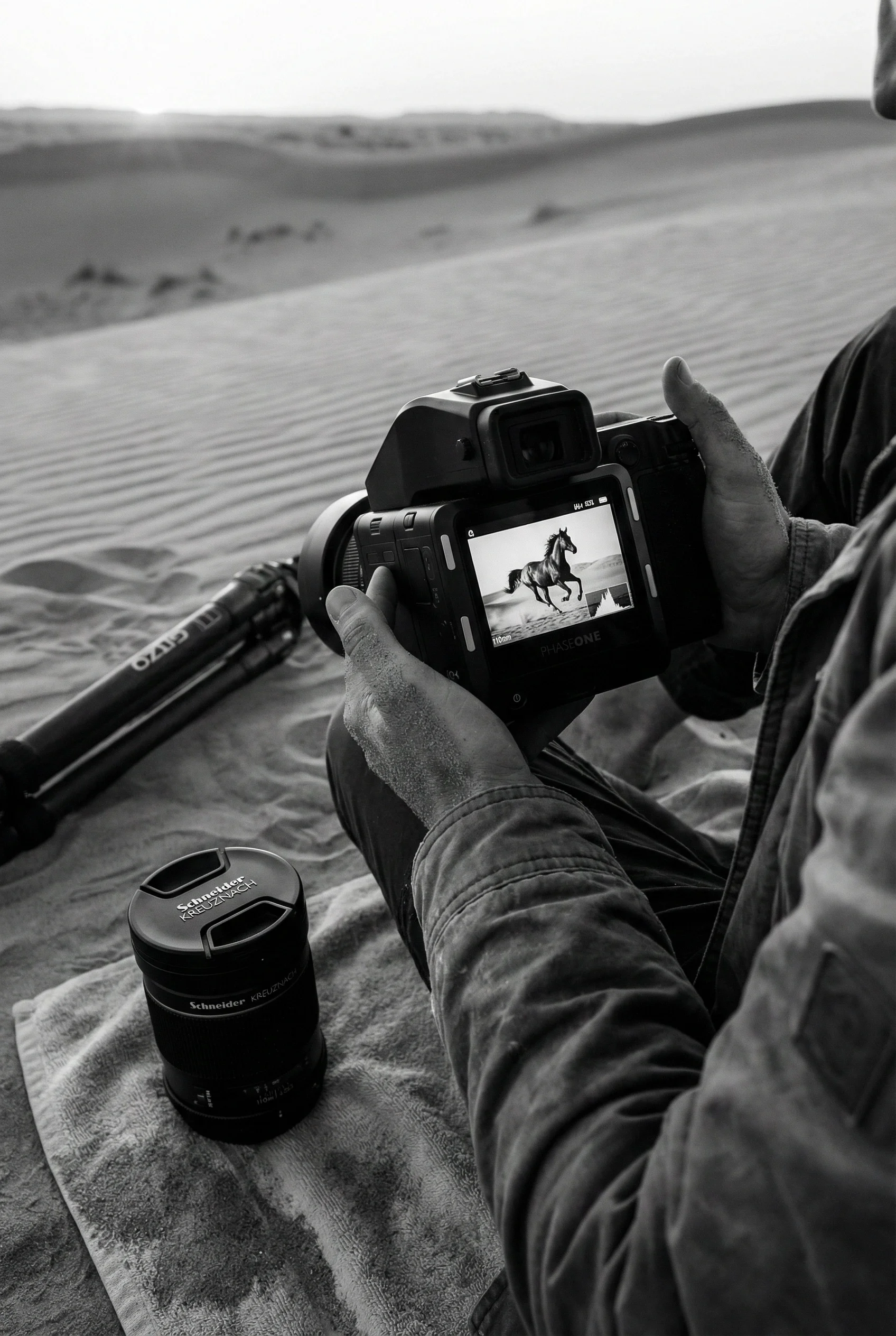
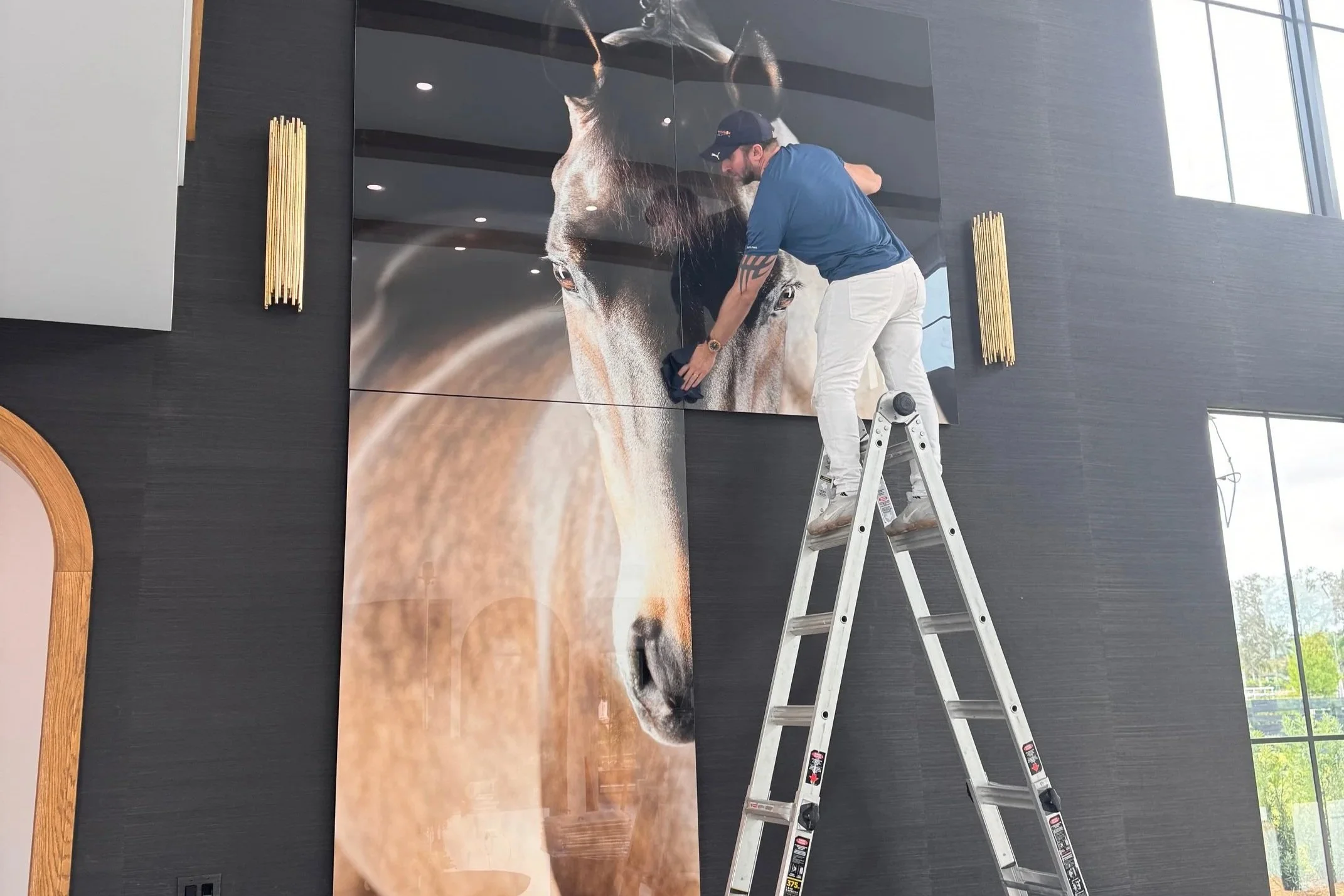
First, the technology. Contemporary fine art photography — particularly at the level I practice, using a Phase One IQ4 system capturing 150 megapixels of information — produces images of extraordinary resolution and tonal depth. Printed at scale on museum-grade substrates using archival pigment inks, a fine art photograph can rival or exceed a painting in its physical presence, detail, and longevity. The permanence ratings on the materials I use at my InnFRAME printing studio exceed 200 years. These are objects built to endure.
Second, the institutional validation. Photography is now a fixture at every major art fair on the circuit — Paris Photo, Art Basel, Frieze, The Armory Show. The world's leading museums, from the Metropolitan Museum of Art to the Tate Modern, have established dedicated photography departments and are actively expanding their collections. When Christie's devotes an entire evening sale to photography, the message to the market is clear.
Third, and perhaps most importantly for collectors entering the market: the price accessibility. A significant work by a recognized fine art photographer remains, today, dramatically more accessible than a comparable work in painting or sculpture. A collector who might spend $50,000 on a mid-career painter's canvas could acquire a museum-quality, limited edition photograph by an internationally exhibited artist — a work that has every structural reason to appreciate as the edition sells through and the artist's career develops.
The collectors who build the most valuable collections are those who recognise quality before the market fully prices it in.
What Distinguishes Investment-Grade Photography
Not all photography is created equal, and not all photographs will appreciate. The collector who approaches photography as an investment — whether the primary motivation or a welcome secondary benefit — should understand what separates work that holds and gains value from work that does not.
Edition discipline is paramount. An artist who limits editions to twelve or fewer prints per image is making a fundamentally different proposition than one who prints in editions of fifty or a hundred. The smaller the edition, the more meaningful the scarcity. Collectors should ask, always, what the edition size is and how many remain available.
Print quality and materials matter enormously. Museum-grade substrates — Hahnemühle Photo Rag, Canson Platine — combined with archival pigment inks ensure that the physical object will maintain its integrity for generations. Work printed on lesser materials may look impressive initially but will degrade over decades, undermining both its aesthetic and financial value.
Exhibition history and institutional recognition provide a credibility framework that supports long-term value. An artist whose work has been shown at Paris Photo, Art Basel, or the Saatchi Gallery carries a validated provenance that strengthens with each additional showing. Gallery representation, publication in reputable catalogues, and inclusion in established collections all contribute to what the market calls an artist's auction record trajectory.
Authenticity documentation protects the collector's investment. Every work should come with a hand-signed certificate of authenticity, ideally with a unique identifier or QR verification system. This documentation is not bureaucratic formality — it is the foundation of provenance, and provenance is the backbone of value in the secondary market.
The Emotional Return
I have focused, deliberately, on the rational case for collecting photography — the market data, the structural advantages, the verifiable scarcity. But I would be dishonest if I did not acknowledge that the most important return on any artwork is not financial. It is emotional.
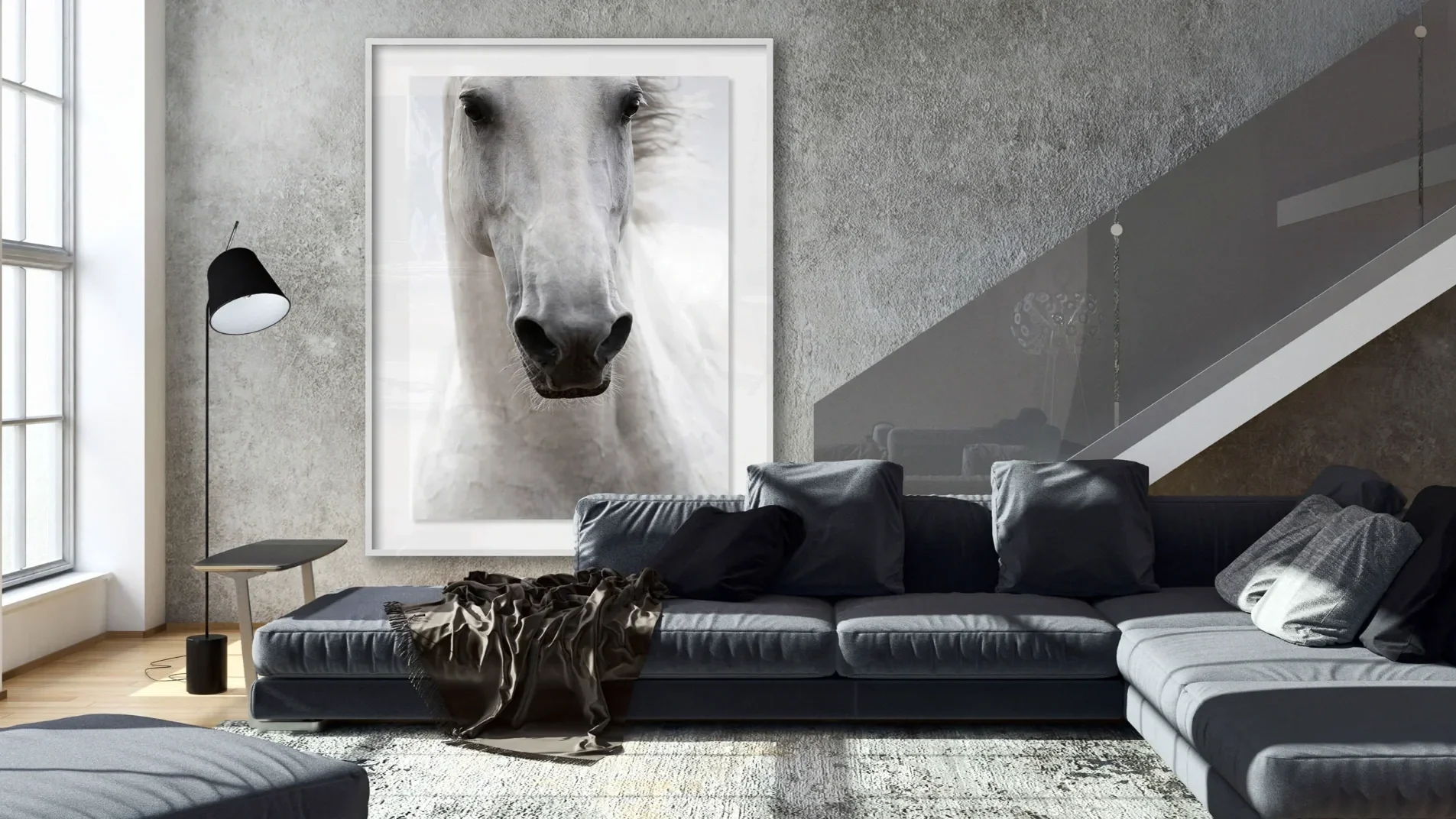
The collectors I work with — and I have had the privilege of placing works in homes, offices, and private galleries across forty-five countries — do not acquire a photograph primarily because they expect it to appreciate. They acquire it because something in the image moved them. Because standing in front of a sixty-inch print of an Arabian horse at dawn, rendered in 150 megapixels of tonal precision on museum-grade paper, produced a feeling they wanted to live with every day.
The fact that the work also happens to be a disciplined, limited, well-documented edition by an internationally exhibited artist with a strong career trajectory — that is the bonus. It means that the emotional investment is also a sound financial one. It means that the work can be enjoyed for decades and, should circumstances change, can be sold or bequeathed with confidence in its value.
The most rewarding collections are built not by following the market, but by following one's eye — and trusting that quality, rarity, and authenticity will always hold their value.
An Invitation
If you have been considering entering the fine art photography market — or if you already collect and are thinking about deepening your commitment — I would encourage you to look seriously at the medium's trajectory. The combination of institutional validation, structural scarcity, technological excellence, and relative price accessibility creates a moment that, in my view, will not last indefinitely. As the market matures and more collectors recognize these dynamics, the entry points that exist today will adjust accordingly.
I offer complimentary art advisory consultations for collectors at every level, whether you are acquiring your first work or building a focused collection. These conversations are about understanding your space, your aesthetic, and your goals — and then helping you find work that meets all three with integrity.
The frontier is open. The question is simply whether you will step into it now, or wish you had.